What is The “Window of Tolerance”?
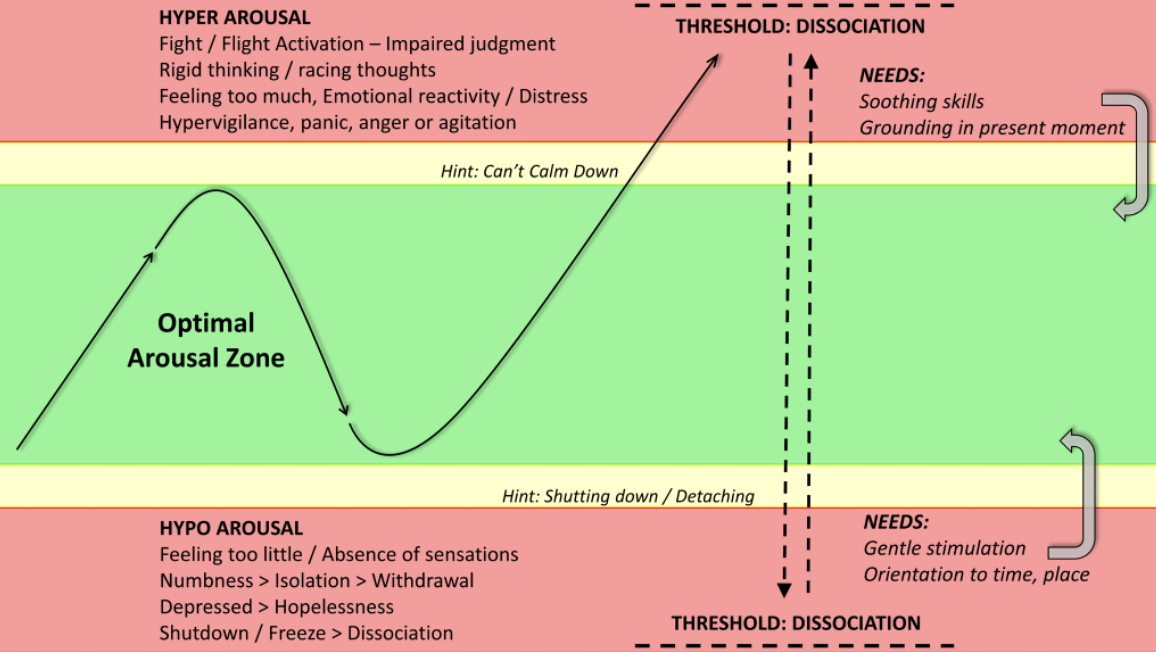
The diagram above lays out the concept of the Window of Tolerance. It’s totally normal to fluctuate between hyper aroused states, optimal states, and hypo aroused states. We all have one and depending on one’s life experiences, genetics, and overall stressors, our “green zone” may be winder or more narrow.
For example, someone with an extensive trauma history-with Complex-PTSD- may have a more narrow window of tolerance. They spend more time in either hypo or hyper arousal. For someone with Panic Disorder, they may spend very little time in hypo arousal compared to hyper arousal. Someone with Chronic and “Treatment Resistant Depression” will experience more hypo arousal as their normal.
What does the Optimal Arousal Zone Feel Like?
When you’re in the “green zone”, you’ll feel:
Calm
Alert
Aware of Options
Relax
Soothing is possible
When you’re in the optimal zone, you’ve got the sense that you can handle challenges that come your way when they come your way. When challenges or stressors come up, you feel able to approach the situation without extremes or impulsivity and you’re also able to relax once the stressor is dealt with.
How Do You Increase Your Window of Tolerance?
The answer to this will vary depending on what’s causing or has caused your window to shrink. But I’ll provide some general coping skills below.
Regulating a Hyper Aroused State:
Self-Soothe:
Sight: Find visual imagery that is calming (Ex. Pictures of loved ones/animals on your phone, wall art in your home, looking outside at a beautiful view, closing your eyes to decrease distressing visual)
Smell: Find smells that are soothing. (Ex. Lotions, perfumes, using pleasant laundry detergent, essential oils, the smell of a meal you love)
Tactile: Find what feels good. (Ex. Your favorite cozy sweatshirt, the weighted blanket, the satin pillow case, fidget toys)
Taste: Find what tastes like comfort. (Ex. Sour/Spicy food to snap you out of it, the baked goodie, the home cooked meal that reminds you of home, your favorite takeout restaurant)
Sound: Find sounds that are pleasing. (Ex. Your favorite up beat playlist, biolateral sounds, nature scapes, noise cancelling headphones, the sound of laughter and play at your local park)
5-4-3-2-1
Name 5 things you can see
Name 4 things you can touch
Name 3 things you can hear
Name 2 things you can smell
Name 1 thing you can taste
Movement
Shake out the anxiety
Bounce around
Take a walk
Body Scan
If tuning into your body feels safe, slow down and take inventory of how each part of your body feels- from head to toe.
Regulating a Hypo Aroused State:
Make contact with loved ones and initiate meaningful connection
Movement
Shake/Dance to wake up the body
Take a walk
Opposite Action
Placing two feet out of bed if the hypo arousal makes you stay in bed
Sending a short text if the hypo arousal wants you to ghost your friends
Doing light stretching if the hypo arousal leaves you feeling cemented to the couch
Use Your Senses
Drink a cold class of water to wake up the body
Eat something spicy or sour
Many of these skills can be used to address both hyper and hypo arousal but I’ll note that in a hypo aroused state, a person is numb or shut down so focusing on the skills that activate the body are best.
Preventing Hypo and Hyper Arousal
While it’s not the goal to never be in hypo or hyper arousal, it can be a goal to prevent being in them more than you have to be.
I like to use a tea kettle metaphor. The more water you have in your tea kettle, the more likely it is that with heat and pressure, your tea kettle will boil over.
Some water in the tea kettle is unavoidable. Think:
A chronic health condition
Food insecurity
A stressful job that you can’t immediately leave
Some water in the tea kettle is avoidable. Think:
Going to bed rather than scrolling until the wee hours of the night!
Eating breakfast rather than rushing out the door relying on caffeine
Breaking down the project into digestible pieces rather than waiting and having the project feel enormous
Asking for the help rather than relying on you and you alone
I know that these are sometimes easier said than done AND, the short term discomfort or inconvenience is still worthwhile for the long term gain and the experience of not blowing your top off.
